
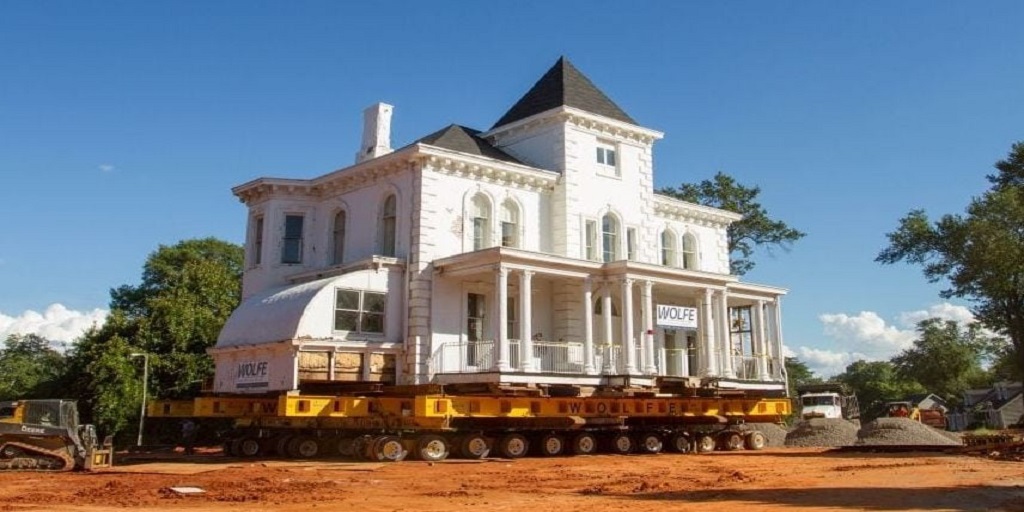
You want to move to a new place, but you might want to keep your home. So what do you think it would actually cost to move your home and everything in it?
Moving an entire house to a new location is a highly technical process that companies like Wolfe House & Building Movers have have perfected over decades. Relocating a house requires a mix of precision engineering, heavy equipment, and detailed planning.
But the biggest question for most homeowners is simple: how much does it cost to move a house? The answer depends on many interconnected factors, and these are the key elements that determine a realistic cost estimate.
Size, Shape, and Type of Structure
The larger and heavier the house, the more it costs to move. A large mansion or building may cost several times more than a smaller house. Weight plays a big role because heavier structures require more engineering, steel beams, hydraulic dollies, and extra manpower.
The shape of the house also matters. A rectangular two-story home is easier to handle than a sprawling one-story layout with wings or extensions. The type of construction, whether wood frame, log, brick, block, or concrete, also changes the process. Brick and stone structures add complexity since they’re heavier and more delicate to lift without cracking.
Foundation Type and Height
The kind of foundation your house sits on is another major factor. Modern homes often use poured concrete or block foundations, which are relatively straightforward to detach from. Older homes might rest on stone or brick piers that are trickier to separate safely.
The height under the house is also critical. If there’s a full basement or tall crawl space, crews have plenty of room to install the lifting beams. But if there’s less than three feet of clearance, excavation may be required before the lift can even begin, adding time and cost.
For houses built directly on a concrete slab, you have two options: lift the home off the slab or move the entire slab with it, an expensive choice that’s usually only worthwhile if the house has valuable interior finishes that can’t be disturbed.
Accessibility and Work Space
A house sitting on a spacious lot with easy access for trucks and hydraulic dollies will cost less to move than one surrounded by trees, power lines, or neighboring homes. Limited access can force movers to bring in smaller, specialized equipment, increasing both labor and duration.
Clearing the route is another expense that’s often overlooked. If the house must travel along public roads, utility lines may need to be temporarily removed, trees trimmed, and traffic rerouted, all of which add to the final bill.
Distance and New Foundation
Local, on-site moves, such as shifting a house to another section of the same property, are usually less expensive than long-distance relocations. But the job isn’t done once the house is moved; it still needs a new foundation.
The standard approach is to pour footers first, roll the house into position, then build the rest of the foundation underneath while the structure is suspended. If a pre-built foundation is required, the move becomes more complex and costly.
Additional Costs: Planning and Permits
Home relocation involves detailed coordination with contractors and local authorities. You’ll need architectural and structural drawings, permits, and disconnection of all utilities: electricity, plumbing, gas, cable, and sewer lines. Landscaping, fencing, and steps must be cleared before work begins.
Moving a House Costs Money
So how much does it cost to move a house? Every move is unique, so it’s best to find a reliable house mover and request a quote based on your specific needs.
While the cost is significant, for many homeowners, it’s well worth it. Moving a cherished or historic house preserves craftsmanship that can’t be replaced and can even save money compared to rebuilding from scratch.
Companies like Wolfe House & Building Movers make the process possible, combining decades of expertise with specialized hydraulic systems that minimize stress on the structure.