

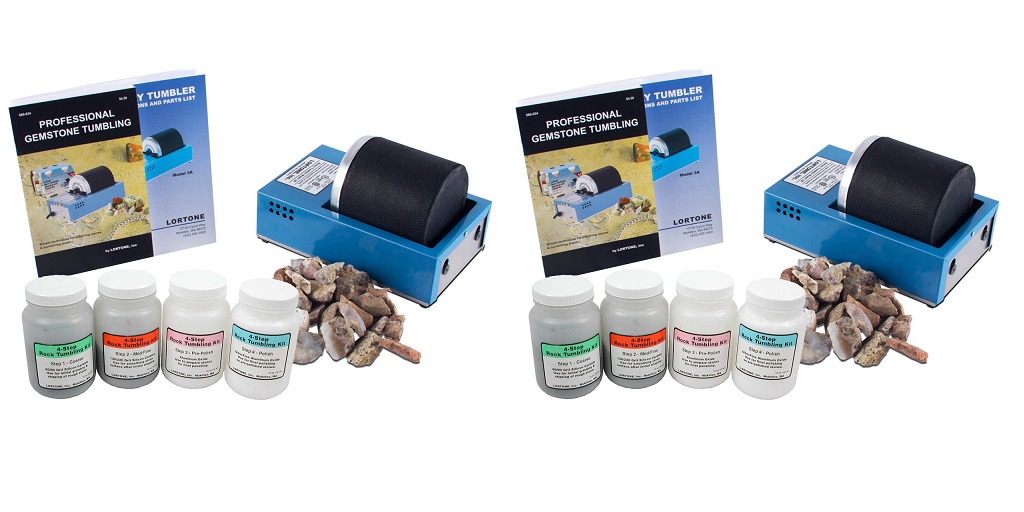
Have you ever noticed how a child’s pockets often come home heavy with “treasures” from the park? To us, they might look like ordinary rocks, but to a child, they are gems waiting to be discovered. A rock tumbler provides an excellent means of transforming a casual interest into a profound fascination with science. It is a journey of transformation that teaches children about geology, physics, and—perhaps most importantly—patience.
The Science of Smooth: How Rock Tumbling Works
At its core, a rock tumbler is a machine that mimics a natural process that happens in riverbeds and on ocean beaches. In nature, rocks are tumbled by currents and waves, rubbing against sand and other stones until their sharp edges are worn away. However, this process can take decades or centuries.
Rock tumbling speeds this up to just a few weeks. The machine consists of a motorized base and a barrel. Inside that barrel, you place raw rocks, water, and varying grades of silicon carbide “grit” (which acts like liquid sandpaper). As the barrel rotates, the rocks rub against the grit, gradually wearing down their rough exterior to reveal the vibrant colors and patterns hidden beneath.
From Rough to Radiant: The Four Stages of Transformation
To get that glass-like finish, the process is usually divided into four distinct stages:
- Coarse grinding: This is the longest stage. It uses heavy grit to reshape the rocks and remove the sharpest edges.
- Fine grinding: The goal here is to smooth out the scratches left by the first stage.
- Pre-polish: The rocks start to look satin-smooth, and their true colors begin to pop.
- Final polish: Using a very fine powder, this stage gives the rocks that professional, high-gloss shine.
Between each stage is a great educational moment to sit down with your child, wash the rocks together, and observe how they have changed.
Beyond Geology: Lessons in Patience and Persistence
Rock tumbling offers a refreshing change of pace as a “slow hobby.” A full cycle usually takes between three to five weeks. This teaches children that great things come to those who wait and that persistence pays off.
Encourage your kids to keep a “Tumbling Journal.” They can draw pictures of the rocks in their raw state and take notes on the changes they see every week. It turns a fun activity into a structured scientific observation, making them feel like real-life geologists.
Tips for a Successful Family Experience
To make sure your hobby remains stress-free, keep these practical tips in mind:
- Find the right spot: Tumblers run 24/7 and can be a bit noisy (they sound like gentle rhythmic rolling). Many parents find that a garage, basement, or utility room is the best place for the machine.
- Never use the sink: The “slurry” (the mud-like mixture of grit and rock dust) that remains after each stage should never be poured down the drain, as it can harden like cement. Instead, rinse the rocks in a bucket and dispose of the water outside.
- Rock quality matters: For the best results, try to tumble rocks of similar hardness together. If you mix soft stones with hard quartz, the softer ones might wear away before the others are even smooth!
Creating Memories That Last
The best part of rock tumbling isn’t just the shiny stones you have at the end; it’s the time spent together. Whether you are searching for raw stones in the backyard or excitedly opening the barrel for the “big reveal” at the final stage, you are creating memories.
Those polished gems can later be used for craft projects, jewelry, or as a proud display of your child’s hard work and scientific curiosity.
Ready to start your own geological adventure? Check out the essential rock tumbler accessories at Home Science Tools to find everything you need for your first batch.

