

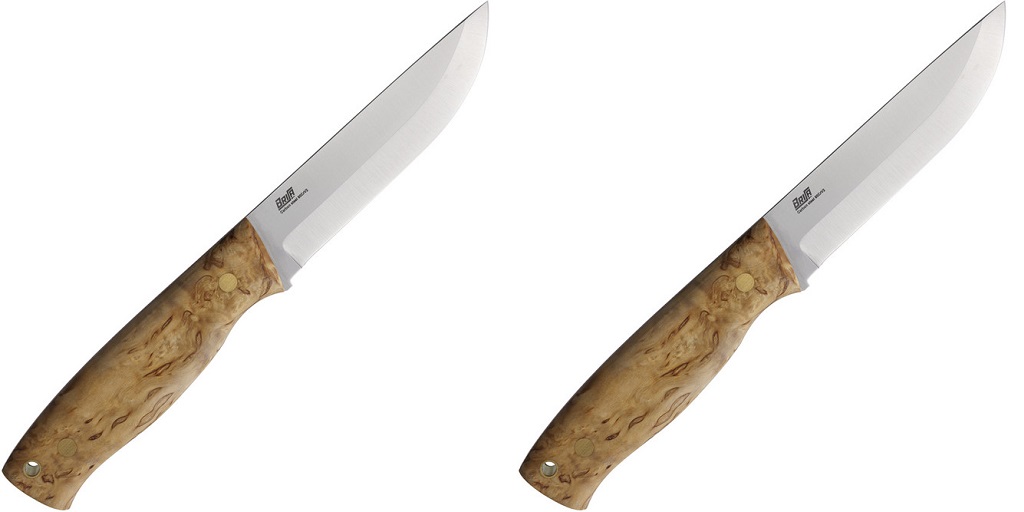
When you step into the woods with nothing but a pack, your knife becomes more than a mere tool. It’s your cooking assistant, your carving companion, your firestarter’s best friend, and, sometimes, your lifeline. That’s why choosing the right bushcraft knife matters. Contrary to popular belief, the ideal one isn’t flashy or overloaded with features. It’s reliable, comfortable, and built to work hard without fuss. Here are some of the qualities of the ideal bushcraft knife so that you can separate the wheat from the chaff:
A Blade Shape That Handles Real Work
A blade doesn’t need to look “wild” to perform well. It just needs to hit the right balance between strength and control.
The classic bushcraft blade has a straight spine and a slight drop point. That shape gives you better control when carving traps, shaping tent pegs, or doing fine slicing. A blade like this lets you guide the tip precisely, keeping you from fighting your own knife when you need accuracy. It also keeps the profile strong enough for heavier tasks such as splitting small logs or scraping bark for tinder.
Steel That Holds Up Under Pressure
A great bushcraft knife requires a high degree of toughness (resistance to chipping or breaking) and ease of sharpening over ultimate edge retention (which is preferred in kitchen knives).
High-carbon steel is a longtime favorite because it sharpens easily and bites into wood with confidence. It does require diligent cleaning and oiling to keep rust and corrosion away, but the payoff is a blade that stays sharp during long days outdoors.
Corrosion resistant stainless steel is the other popular choice, especially if you’re often around moisture or don’t want to think about constantly wiping down your knife. However, it can be more brittle and takes longer to restore an edge with primitive tools.
Ultimately, the key is choosing steel that feels dependable, sharpens without a fight, and holds that edge long enough to get things done.
A Grind That Makes Carving Feel Natural
Many bushcrafters swear by the Scandinavian grind, often called a Scandi grind. It has a wide, flat bevel that runs straight to the edge, making it very easy to sharpen consistently in the field using only a flat stone and even easier to control when carving wood. It almost guides itself through wood fibers, which is why so many skill-focused outdoorsfolk lean on it.
Still, other grinds can work as long as they match your style. The important thing is that the edge cuts cleanly without forcing you to push harder than you should.
A Full Tang That Stands Up to Abuse
A full tang means the metal of the blade runs through the entire handle. This gives the knife strength and stability, which you’ll feel when batoning wood (splitting wood by hitting the spine with another piece of wood) or applying pressure during tougher tasks.
Partial tangs can work for lighter jobs, but a full tang blade completely removes doubt. With one solid piece of steel from tip to butt, you know the tool won’t fail just because you’re pushing it a little harder.
Handle Comfort That Lasts All Day
If a knife handle feels awkward in the hand, you’ll notice, quickly.
Bushcraft work involves long sessions of carving, slicing, notching, and shaving. The ideal handle fills the hand comfortably and doesn’t create hot spots. Materials like wood, rubberized coatings, and Micarta® (a type of high-pressure industrial laminate) each have their own loyal fans, and offer something different in terms of feel and grip. What really matters is that your hand stays comfortable and secure, even if the handle gets wet, cold, or dirty. Remember: a knife that slips is a knife that can hurt you, so grip matters more than style.
Shop for a Bushcraft Knife on The Knife Connection
If you’re in need of a bushcraft knife, the best place to shop is The Knife Connection. They carry a wide selection from some of the most well-known and reputable brands in the industry.

