

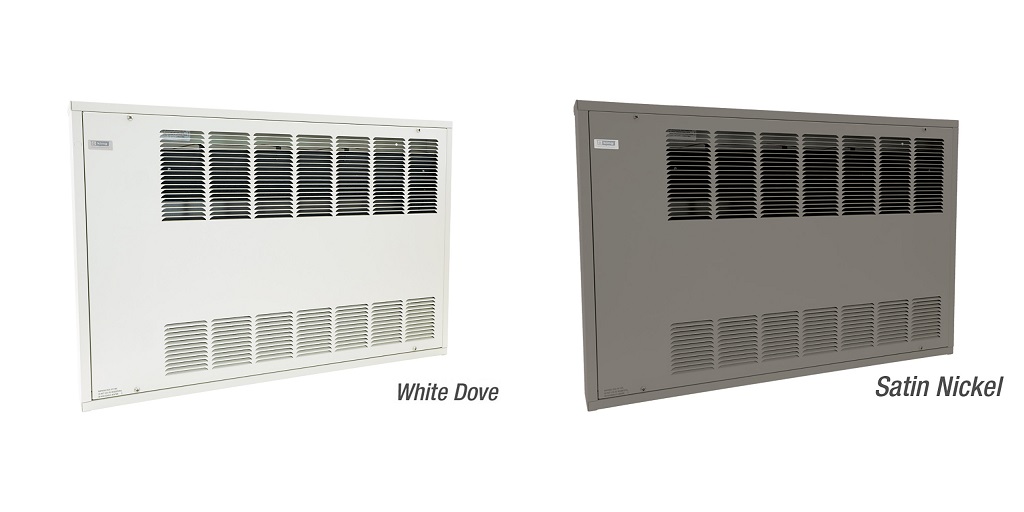
A school gymnasium sits empty for most of the week. Gym class runs for an hour, maybe two. Then the space goes dark. It stays that way until Friday night, when two hundred parents file in for a basketball game. Heating a 10,000-square-foot room with 30-foot ceilings on that kind of schedule is an expensive problem, and one that most central HVAC systems handle badly. An electric cabinet heater changes that. For school districts watching every dollar, the math actually works.
What an Electric Cabinet Heater Does Differently
Gymnasiums are among the hardest spaces to heat efficiently. All that warm air rises straight to the ceiling. Students and spectators sit in the cold below. A cabinet unit heater addresses this directly by pushing heated air horizontally across the occupied zone rather than relying on passive radiation from above. The gym warms up faster, the heat stays where people are, and the system doesn’t have to run for hours before anyone feels it.
Schools that install an electric cabinet heater in the gymnasium can run that space as its own heating zone, completely separate from the rest of the building’s load. A Friday night game doesn’t require warming the science wing. A Tuesday morning assembly doesn’t run up the bill. Central systems lump the gym’s schedule in with every other room on campus. For a gymnasium that sits empty most of the week and fills up for Friday events, paying only for the heat that room needs adds up across a school year.
Budget Season Is Year-Round
School districts aren’t flush with capital. Facilities managers are constantly choosing between deferred maintenance and active repairs. A full HVAC overhaul isn’t a realistic option for most. A commercial cabinet heater or forced air electric heater fits into spaces where adding new ductwork would mean tearing up walls and ceilings, which most schools can’t afford and can’t schedule around an academic calendar. No contractor needs to redesign the mechanical system before installation.
Heater cabinet installation is far less disruptive than a mechanical retrofit. An electric fan cabinet heater or an industrial electric heater mounts on walls or hangs from ceilings, keeping the gym usable during installation. The case for electric cabinet heaters gets even stronger when you factor in safety: these units don’t burn fuel, which means no combustion byproducts, no gas lines, and no carbon monoxide risk in a building full of children. An electric space heater cabinet with its own thermostat and timer runs the room’s schedule. Nothing more. For a district managing aging infrastructure across multiple buildings, that’s a meaningful difference.
An Electric Cabinet Heater Heats the Gym on Its Own Schedule
Facilities teams managing several school buildings are already stretched thin. Monitoring every thermostat manually isn’t realistic. An electric unit heater on its own circuit gives them room-level control, completely independent of the rest of the building. Schedule it to warm up an hour before the evening event. It shuts off on its own when the night’s done. Nobody has to drive back to the school to check on it.
That granular control also makes it easier to track energy use by space rather than absorbing gymnasium heating into a campus-wide utility bill. When district administrators ask where costs are going, facilities managers can show them data broken down by building and zone, not just a lump sum. That makes budget conversations considerably easier to have. An electric cabinet heater makes that kind of reporting possible. Central systems can’t give you that breakdown.
For schools evaluating heating options for gymnasiums or other large, intermittently used spaces, Northstock carries electric cabinet heaters suited for commercial and institutional applications, and their team can help identify the right unit for the space.
For more information about Industrial Air Curtains and Modine Unit Heaters Please visit: NorthStock Inc.

